

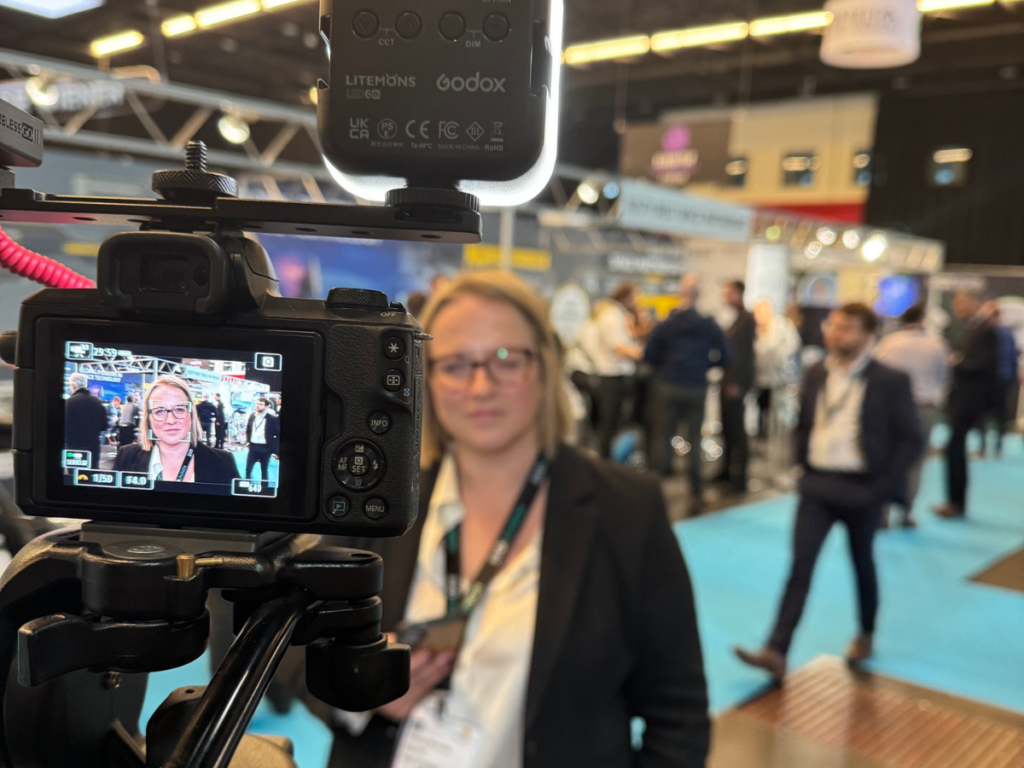
I don’t know anything about space
By Jess Burrows, Head of Digital
Or at least, I didn’t.
When I started working at Halo circa 3 years ago, I’d find myself in meetings where people were merrily chatting about onboard edge compute, autonomous rendezvous and proximity operation, geospatial intelligence and the next advancement in biotech.
The technology was fascinating, but what fascinated me even more was watching incredibly smart people dedicate years of their lives to solving problems most of the world doesn’t even realise exist. It blows my mind what these brilliant people are developing behind the scenes, every day, for the good of our planet. One of my favourite things is relaying little snippets of these mind-blowing fun facts to friends and family (makes for great pub chat): ‘Do you know what these guys are doing? Somebody actually built a factory in space!” – that kind of thing!
The assumption people make is that everyone working in the space or deep-tech industries – no matter the job role – must have spent their childhood building rockets, writing code or taking apart computers. Not true for me, not true for lots of people actually!
Many of us arrived through curiosity rather than expertise.
My role is just that. Our ‘starter for ten’ role at Halo is to ask questions.
Lots and lots of them.
We ask the simplest questions, the ones that – to an engineer or tech whizz may seem childlike or basic – but it’s these kinds of questions that make an engineer stop and think for a second before explaining something in a different way. The kind of questions that uncover why a piece of tech matters beyond the technical spec. The questions that reveal the story hiding underneath the complexity.
Because whilst our clients are often building remarkable things, people don’t connect with innovation simply because it’s technically impressive. They connect with what it changes, the benefits it brings, the once-in-a-lifetime impact this will have and will continue to have for generations that follow.
The satellite isn’t the story.
The fact it can help monitor wildfires is.
The AI platform isn’t the story.
The fact it saves people thousands of hours is.
The biotech breakthrough isn’t the story.
The fact it could save lives is.
These are the cumulative and condensed special bits of innovation that fascinate me.
At Halo, we spend our days absorbing information, asking questions, reading, listening and learning – enough to translate our clients’ expertise into something that resonates with the people they’re trying to reach.
Every week you crack open the door to something new – a different challenge or a different vision of the future. One day you’re talking about satellite communications, the next you’re exploring defence technology or AI infrastructure. You don’t need to arrive with all the answers because the learning never really stops.
A little bit of ignorance can be useful.
If something doesn’t make sense to me, there’s a good chance it won’t make sense to a journalist, an investor or someone scrolling LinkedIn. That curiosity becomes a strength because it forces you to keep digging until you’ve found the explanation that clicks.
The exciting part at Halo isn’t arriving in this industry as an expert.
It’s getting a front-row seat to the people building the future and having the privilege of helping tell their stories.
When we look for new people to join Halo, we’re far more interested in curiosity, communication skills and a genuine interest in technology, science and the betterment of our future than we are in whether someone can explain every acronym in the space sector.
Take a look at our latest role, closing 1st July: https://www.ha-lo.co/careers/
Halo is a communications agency telling brilliant stories for brilliant companies across space, defence, deep tech and AI.